What's the festival with the goats and the morning prayers?
If you've driven past a mosque on a certain morning and seen rows of cars, families in their finest baju, and a buzz of activity around the back of the compound, you've probably caught Hari Raya Haji. It's one of two major celebrations on the Muslim calendar, and in Singapore it carries a quieter, more solemn weight than its better-known cousin, Hari Raya Puasa.
Hari Raya Haji, known in Arabic as Eid al-Adha or the festival of sacrifice, marks the end of the annual Haj pilgrimage to Mecca. It commemorates the Prophet Ibrahim's willingness to sacrifice his son in obedience to God, and God's mercy in providing a ram instead. For Singapore's Malay-Muslim community, it is a day of prayer, gratitude, and sharing.
Hari Raya Haji 2026
Hari Raya Haji 2026 falls on Wednesday 27 May. It is a gazetted public holiday in Singapore, confirmed each year in the Ministry of Manpower holiday list, with the exact date set in coordination with MUIS, the Islamic Religious Council of Singapore, based on the Islamic lunar calendar.
The 2026 date sits in an interesting spot. Vesak Day falls on Sunday 31 May 2026, which means Monday 1 June becomes an in-lieu public holiday. With Hari Raya Haji on the Wednesday before, taking Thursday 28 and Friday 29 May off stretches into a six-day break from Wednesday right through to Monday. We break down the mechanics in our in-lieu Monday rule explainer, and the full picture is in the long weekend guide for 2026.
Because it follows the lunar calendar, the date shifts earlier each year:
| Year | Hari Raya Haji | Day of week |
|---|---|---|
| 2024 | 17 June | Monday |
| 2025 | 7 June | Saturday |
| 2026 | 27 May | Wednesday |
You can always confirm the layout on the May 2026 calendar when planning leave.
How it's observed in Singapore
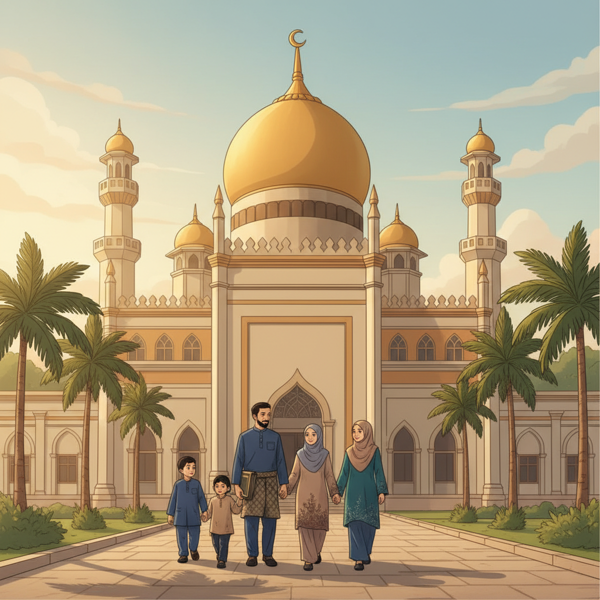
The day begins early. Muslims across the island head to mosques for the special Eid prayers, usually held in the morning. Major mosques like Masjid Sultan in Kampong Glam, Masjid Maarof, and neighbourhood mosques across the HDB heartlands fill with congregants dressed in their finest traditional wear.
After prayers comes the part the festival is named for. The korban, or ritual sacrifice, is the central act of Hari Raya Haji. In Singapore this is tightly organised and regulated for hygiene and welfare. MUIS appoints specific mosques and approved sites to carry out the korban, with livestock often brought in for the occasion. The meat is then divided into three portions following tradition:
- One portion for the family performing the sacrifice
- One portion for relatives and friends
- One portion for the poor and needy
This sharing is the heart of the festival. The distribution of meat to lower-income families and beneficiaries reflects the spirit of generosity and community care that defines the day.
How it differs from Hari Raya Puasa
People sometimes mix up the two Hari Rayas, so here's the simple version. Hari Raya Puasa marks the end of the Ramadan fasting month and is the bigger, more festive celebration, complete with the Geylang Serai bazaar, open houses, and visiting. Hari Raya Haji comes about two months later and is more reflective, centred on pilgrimage, sacrifice, and charity rather than feasting and visiting.
Both are gazetted public holidays in Singapore, and both are deeply woven into the rhythm of the Malay-Muslim community here. But the mood is different. Puasa is joyful and social. Haji is grateful and giving.
The Haj connection
Hari Raya Haji coincides with the climax of the Haj pilgrimage in Mecca, one of the five pillars of Islam. Every year a number of Singaporean Muslims make the journey, often after years on the waiting list managed locally. Returning pilgrims are warmly welcomed, and the title of Haji or Hajjah carries real respect within the community.
For families with a member performing the Haj, the festival takes on extra meaning. It is a day to think of loved ones thousands of kilometres away, gathered on the plains of Arafat, while the rest of the community marks the occasion at home.
Hari Raya Haji may not have the bustle of the Ramadan bazaars, but its quiet generosity gives it a special place on the Singapore calendar. If you want to see how it fits alongside the year's other festivals and plan your leave around that long May-June stretch, the 2026 calendar lays it all out.